1891
A Town Is Born
Darrington takes root on an old Skagit campsite where the Sauk River bends below Whitehorse Mountain. The settlement is named for a settler's mother, and life here revolves around the forests that surround it — the biggest, deepest timber in the Northwest.
1901
The Railroad Arrives
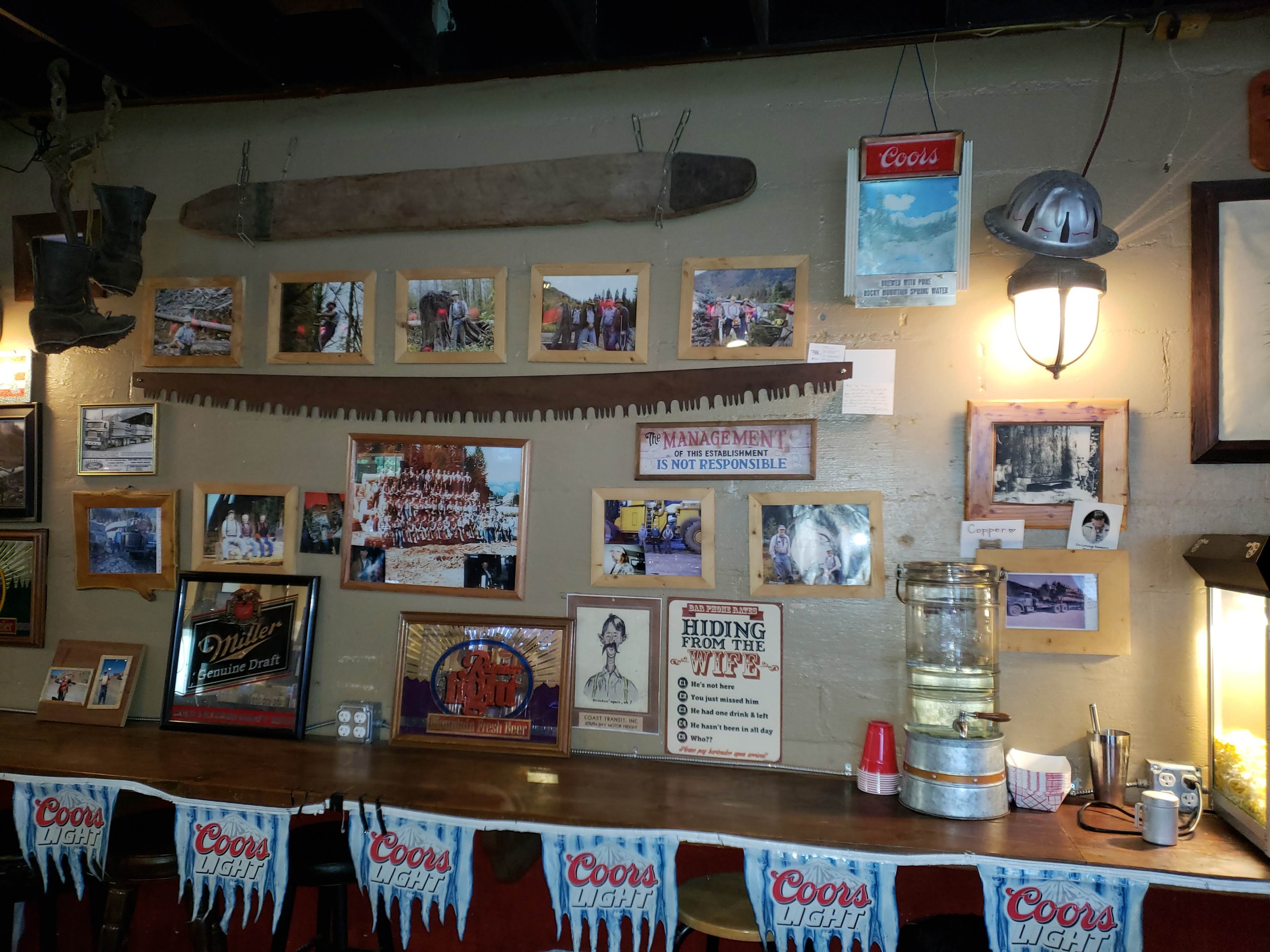
The Northern Pacific Railway reaches Darrington, and the mills follow fast. By the early 1910s the U.S. Lumber Company is cutting 23,000 board feet a day. The town fills with sawyers, millworkers, and the families who follow them into the mountains — and those working people need a place to gather at the end of the shift.
1910
The Wet Vote
As the county goes dry, Darrington holds its ground. The town votes 46–35 to keep its saloons open — an early sign of the independent streak this valley has never lost. Drinking establishments aren't a vice here; they're the town square.
1935
The Red Top Opens Its Doors
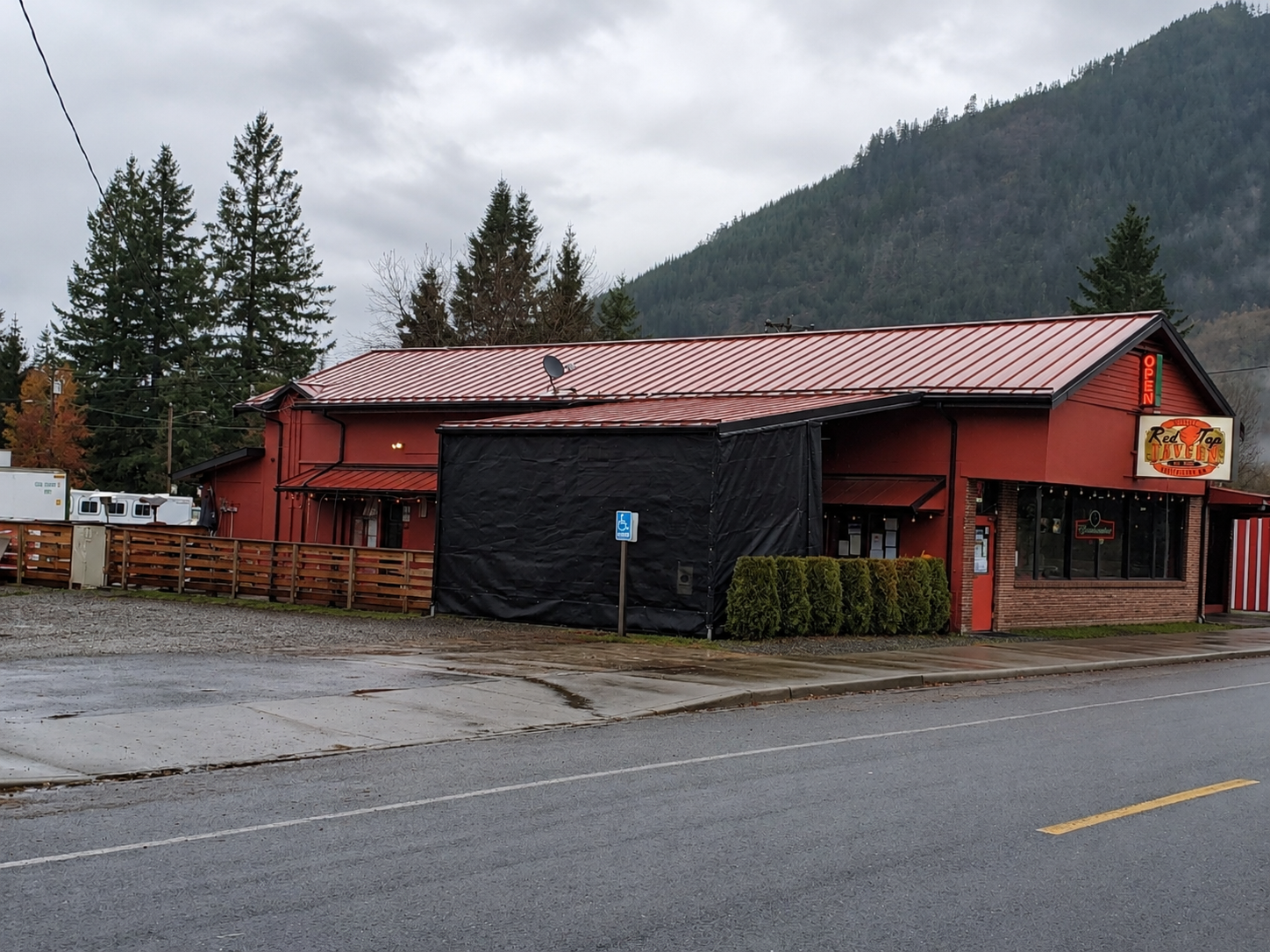
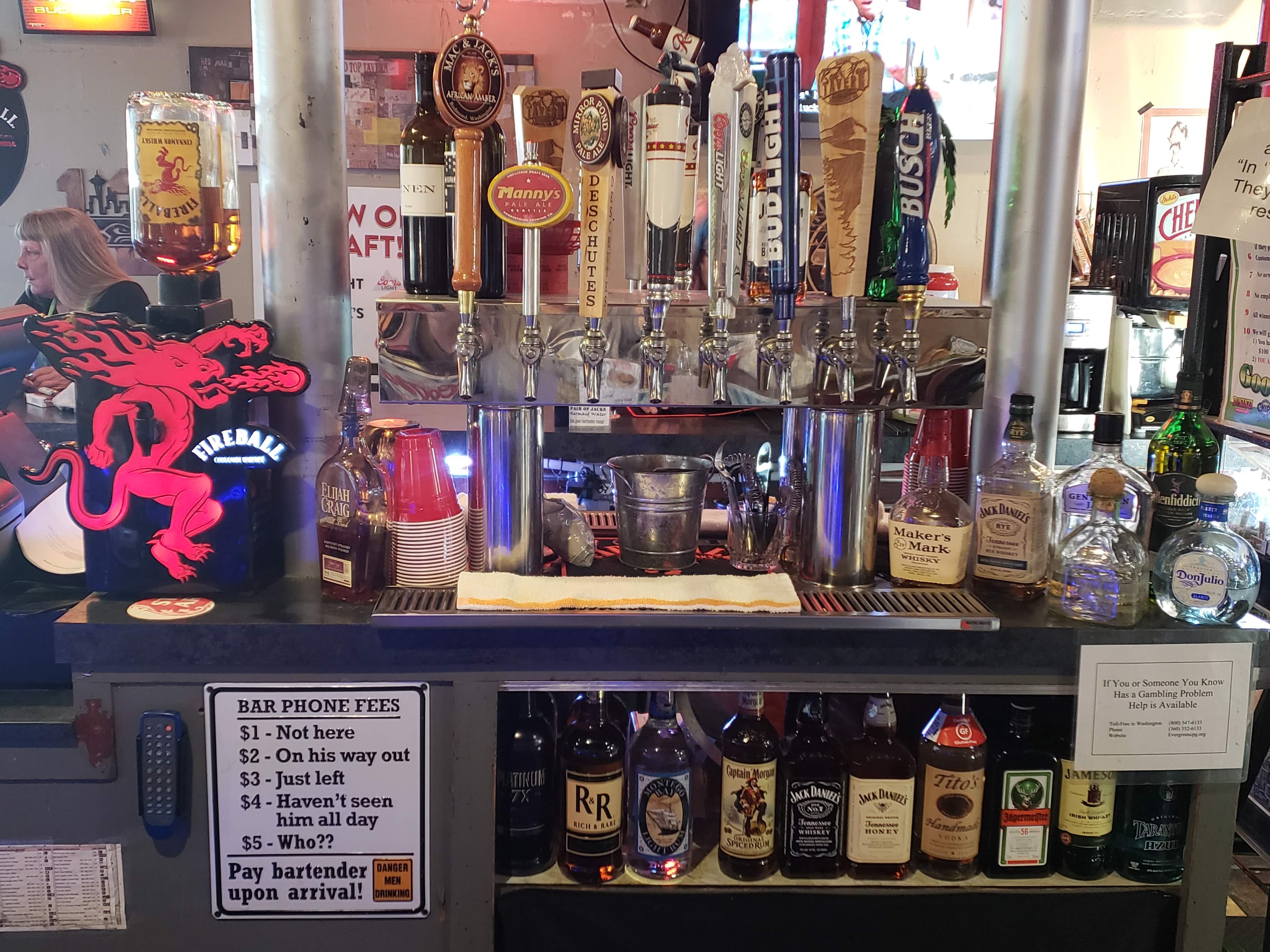
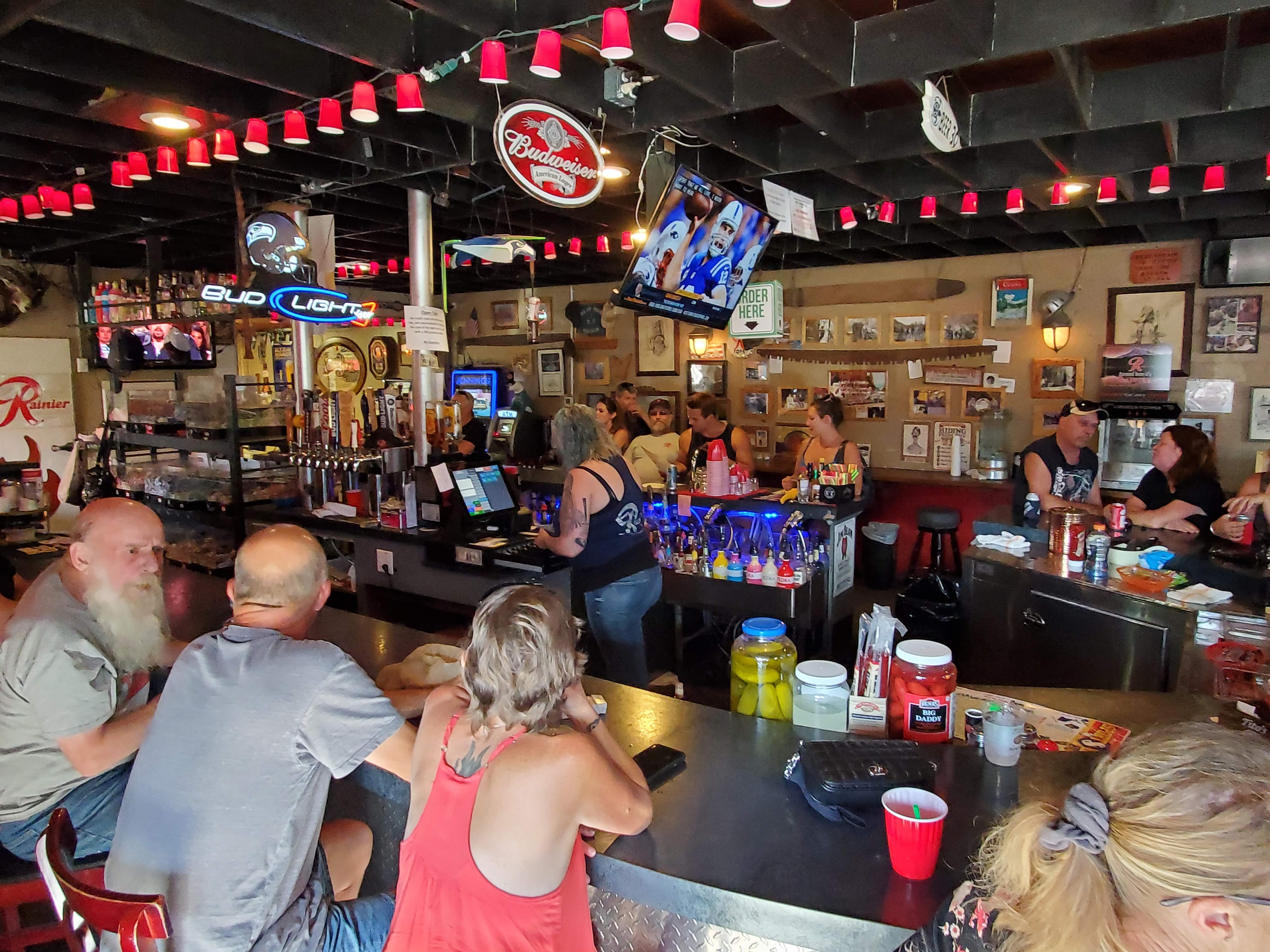
Prohibition is dead, the mills are still running, and Darrington gets a tavern of its own. The Red Top opens in 1935 — loggers coming off the slopes still smelling of sawdust and pine pitch, millworkers trading stories over cold beer. The name sticks, the neon glows, and the doors have barely closed since.
1945
Incorporation and the Timberbowl
On October 15, 1945, Darrington incorporates as a fourth-class town, and the community celebrates with the Timberbowl festival. The Red Top is part of it all — same barstools, same pride, one town officially on the map.
1940s–50s
The Tarheel Wave
Families arrive from the mountains of North Carolina — particularly around Sylva — drawn by logging work and cheap land. They bring bluegrass, barbecue, and tight-knit mountain ways. Their descendants still fill these barstools, and their music still fills the valley every July.
1970s
Bluegrass Comes to Whitehorse
The Darrington Bluegrass Festival takes root at Whitehorse Mountain Amphitheater, drawing as many as 10,000 pickers and fans each summer. The Tarheel heritage made the town a natural home for it — and festival weekends still mean a full house at the Red Top.
1980s–90s
The Timber Wars
Spotted owl protections and tighter federal logging restrictions close mill after mill across the Northwest. Darrington refuses to become a ghost town. The Hampton mill keeps running, the town keeps its school, and the Red Top keeps its doors open. Some things in this valley don't quit.
2003
The Mountain Loop Washes Out
Flooding tears out the Mountain Loop Highway, cutting Darrington off from the west. Businesses struggle and the town loses tourist revenue almost overnight. It's another hard chapter — and another one the Red Top rides out alongside its neighbors.
2014
The Oso Slide
On March 22, a hillside near Oso — twelve miles west — gives way in the deadliest landslide in American history. Darrington becomes a staging ground for the rescue: the community center shelters victims, the rodeo grounds take in animals, and the Red Top feeds and pours for the crews working around the clock. This town knows how to show up for its own.
Today
Still Standing, Still Pouring
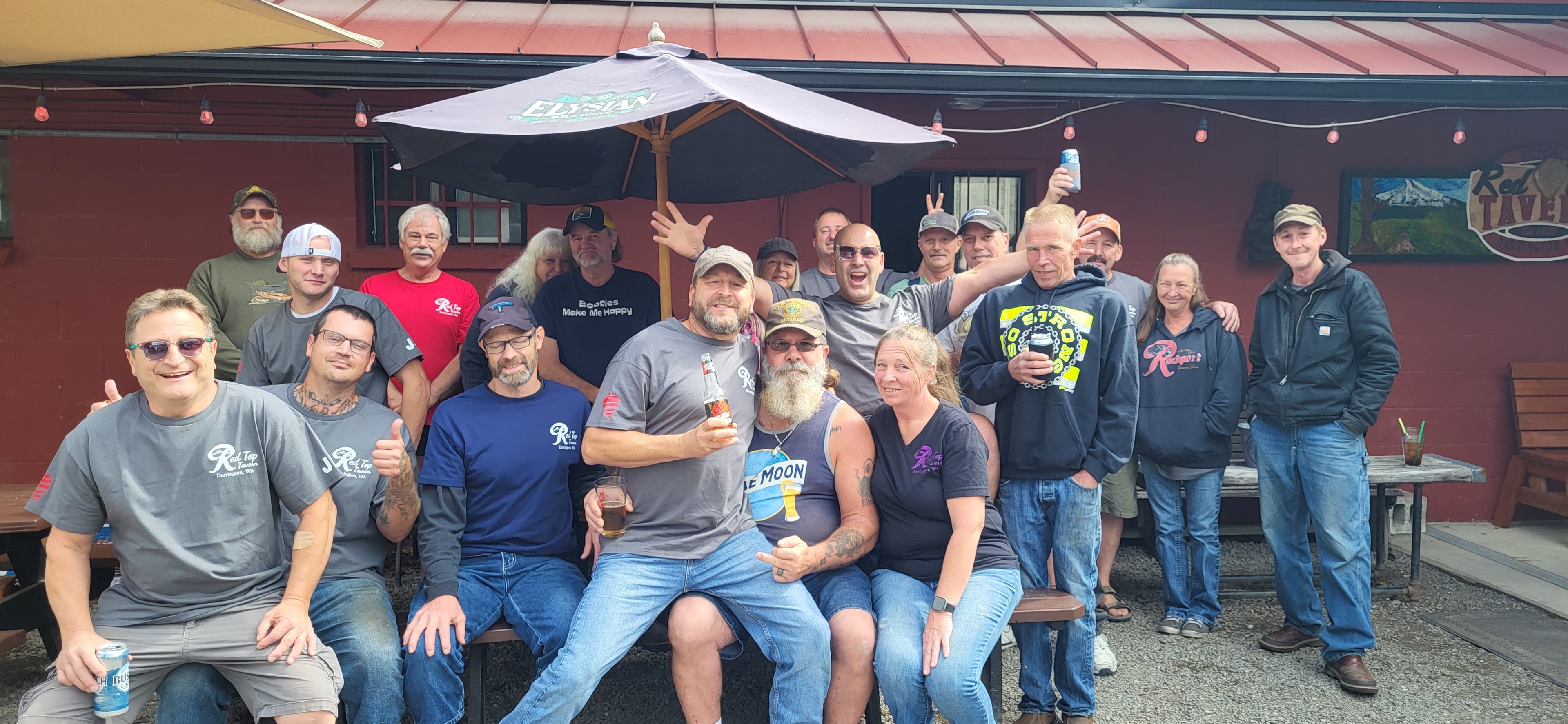
Population 1,462. One sawmill, one school, one tavern worth talking about. Bob Barker was born up the road. The Loggers still win ballgames. The bluegrass still plays every July. And the Red Top is still open — same welcome at the door it's always had. Nearly a century in, the story's still being written one night at a time.